

Meet the Creative Director Behind Teen Vogue's New Era
Mi-Anne Chan gave Alysa Liu her first cover and wants to give every young person a universe to call their own
Welcome to Renegades, Gold House’s editorial series spotlighting Asian Pacific leaders and creatives who are carving their own paths and defying stereotypes along the way. This week’s Renegade is Teen Vogue’s Creative Editorial Director, Mi-Anne Chan!
Mi-Anne Chan is a writer, editor, and creative director based in Brooklyn, New York. Her career at Condé Nast spans editorial content and brand development, including leading video programming and creative development across Teen Vogue, Them, and Glamour, where she built each brand's digital portfolio across YouTube, TikTok, and Instagram. She is also the founding editor of mixed feelings, a newsletter and community dedicated to fandom and youth subculture, and most recently stepped into the role of Creative Editorial Director of Teen Vogue.
We ask all our Renegades: what did you want to be when you were growing up, and how does that compare to where you are now?
I wanted to be everything except a journalist when I was a kid: a vet, a lawyer, an expert in international relations (despite knowing little to nothing about what that actually meant in practice). I don’t think I had any real understanding of what a job in magazines could be—it felt like a make-believe job you could only have in movies. It wasn’t until I moved to New York for school, initially majoring in (and failing at) international relations, that I happened upon an editorial internship listing for the beauty department of W Magazine. A YouTube beauty guru obsessive at the time, I applied on a whim and ended up getting the job, which set me on a path that—at risk of sounding overly superlative—changed my life.
Tell us a little bit more about your cultural background. What is something influenced by your culture that you try to leave behind or bring with you to the workplace?
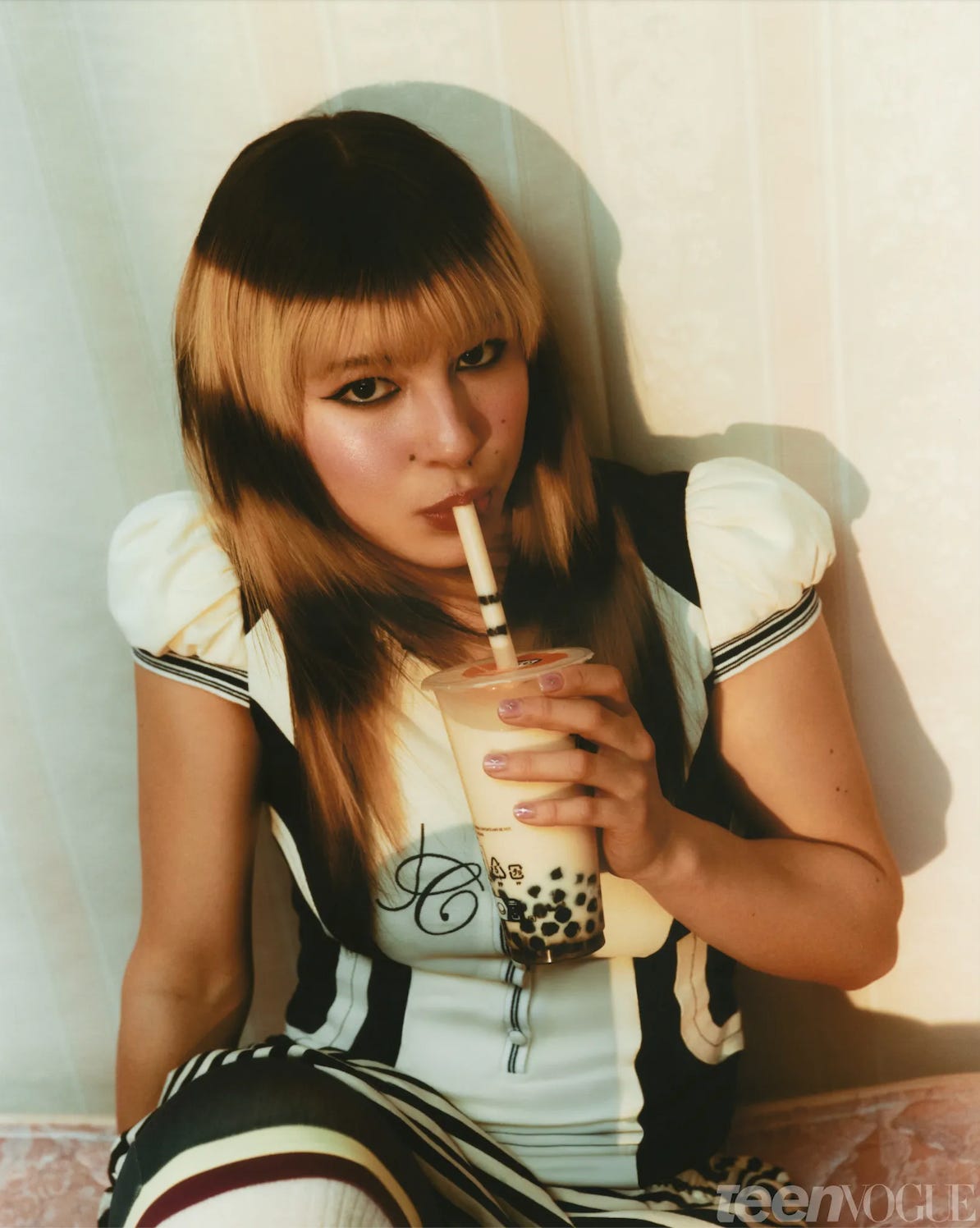
I think I have pretty classically “Asian American” interests, pretty much what you’d expect from a Chinese-American kid who grew up in the Bay Area. I love bubble tea, anime, DDR, and sliced fruit after dinner. I follow accounts dedicated to exploring youth culture in parts of Asia, and I try to keep myself relatively up-to-date on what’s going on outside of our bubble in the US. I think the specificity of the Asian American experience is something I bring into work both subconsciously and consciously. My first cover as editor of Teen Vogue was Alysa Liu’s first magazine cover. For the photo creative, which photographer Erika Long captured absolutely perfectly, I really wanted to lean into the grain and contrast of old Chinese album covers like Faye Wong’s Chàng Yóu…the sunburnt blush, the whimsical, amber-hued lighting. Alysa is also a Chinese girl from the Bay, so I wanted to make sure we injected specific references like the jasmine milk tea and boba (Alysa’s favorite) she’s sipping, the vintage Game Boys, the tatami mats, and the styling that I hoped felt reminiscent of a modern-day magical girl—a nod to Alysa’s love for anime.
You are recognizable to many from your days at Refinery29, hosting the YouTube show “Beauty with Mi”. Going from editorial work to becoming an on-camera host isn’t a simple leap; it requires a very specific kind of courage, especially as a woman of color in a beauty media landscape that hasn’t always reflected diverse faces. What or who inspired you to put yourself in front of the camera, and was that door opened for you, or did you have to push your way through it?
If I’m being completely honest, I started doing on-camera work to fill a specific need. It was around 2014, right around the big “pivot to video” that a lot of media brands were experiencing. At the time, I was an editorial assistant at Refinery29 on the beauty team, and because I was the youngest, I often got assigned the stories that felt more “digitally native,” like profiling YouTube creators or beauty influencers.
When Refinery29 started experimenting with more beauty-centric video content, I was also tasked with reviewing the video team’s scripts to ensure their content aligned with what we were publishing on site. Because I was so entrenched in the world of beauty and knew all the latest launches and had connections to experts like dermatologists and makeup artists, it became more efficient for me to just write the scripts myself and eventually for me to deliver those scripts on camera as well.
A host is always most impactful when they have something to say, and having me host the beauty content, as a beauty writer, was both a lot easier and more authentic than having someone outside of the industry host a beauty show. That snowballed into me hosting “Beauty with Mi” and eventually becoming a producer on my show! I know I said the W Mag internship changed my life, but “Beauty with Mi” gave me experience in both the visual and editorial sides of the industry and made me an expert in the beauty space, and for that I am so incredibly grateful.
Since then, you’ve led video programming and creative development at Glamour, Them, and Teen Vogue, three brands with distinct audiences and tones. How do you approach translating a publication’s editorial voice into video, and what does it actually take to get it right?
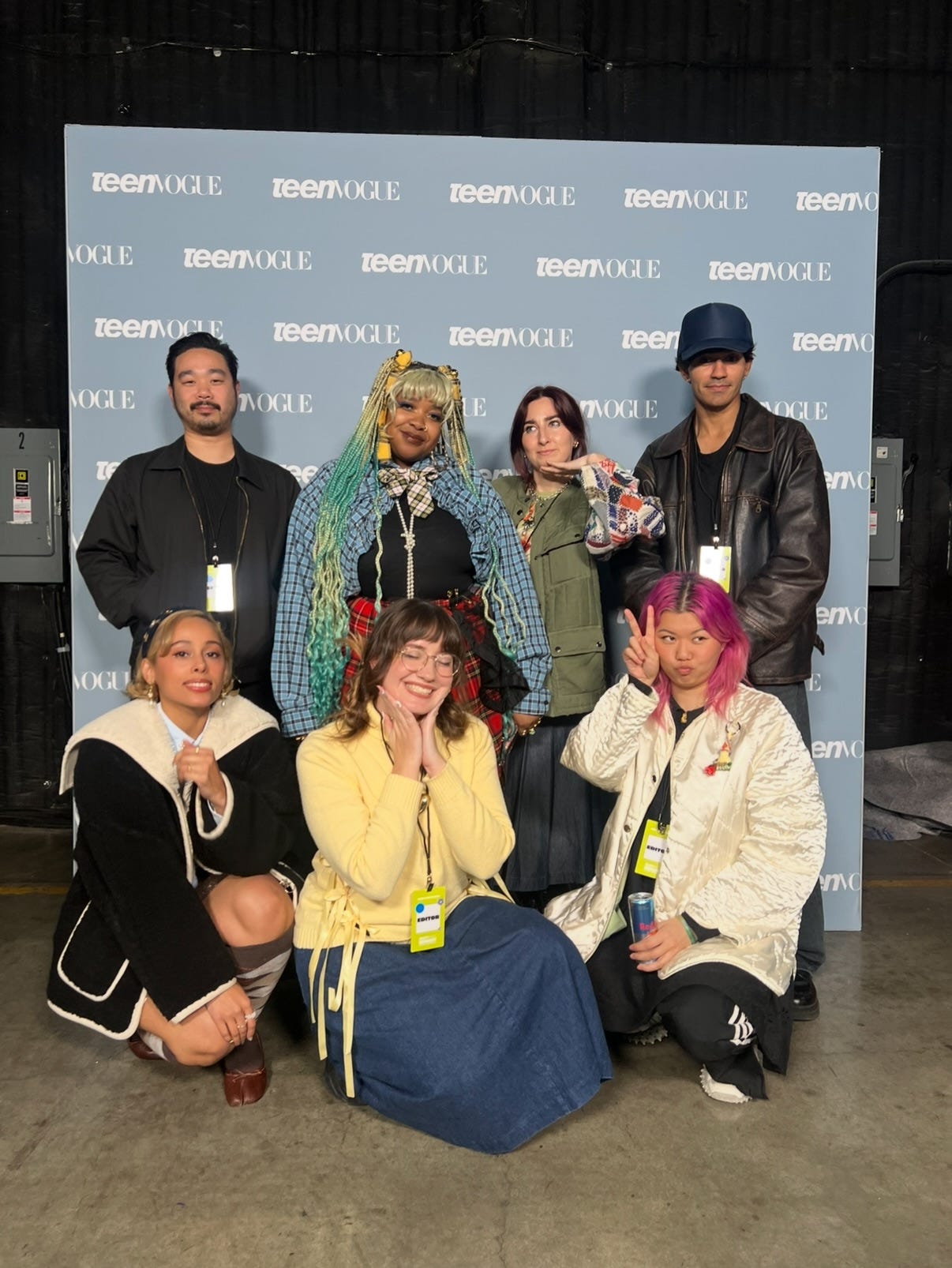
It helped that I had an incredible team of the best creatives in the video business—Anastasia Sanger for Glamour, Catherine Mhloyi for Them, and Amalie MacGowan for Teen Vogue. They really were (and are) the superstars of this era of my career. That said, the first step is always understanding what each magazine’s mission and editorial POV is, then translating the stories that feel the most visually-minded into either short-form video for TikTok and Instagram or longer-form video for YouTube. It’s also important to really understand the platforms you’re working on and knowing what types of talent, formats, and material will work best on TikTok, Instagram, YouTube, or on site. Some things are true across all these platforms—like the fact that the first 2-3 seconds of a video are the most important for keeping a viewer engaged—but other aspects can vary widely. Coming up with sticky, repeatable formats is something we take very seriously at Condé Nast. Not only do [these formats] make creating videos more turnkey and efficient for small teams, but they also give the viewer something to latch onto, especially when audiences are constantly overwhelmed by the sheer amount of content online. And then there are the moments that feel distinctly emblematic of each brand’s DNA where we’d create custom video content and a huge video plan to create the most impact—for Them, one of those moments was Trans Day of Visibility, for Glamour it was Women of the Year, and for Teen Vogue it’s Teen Vogue Fest (which is our in-person, ticketed event that actually returns to NYC for the first time in eight years on July 25th this summer!).
You are the editor of mixed feelings, an advice-column newsletter that explores the intersection between mental health, fandom, online culture. What inspired you to start that project, and how has your audience surprised you over the years?
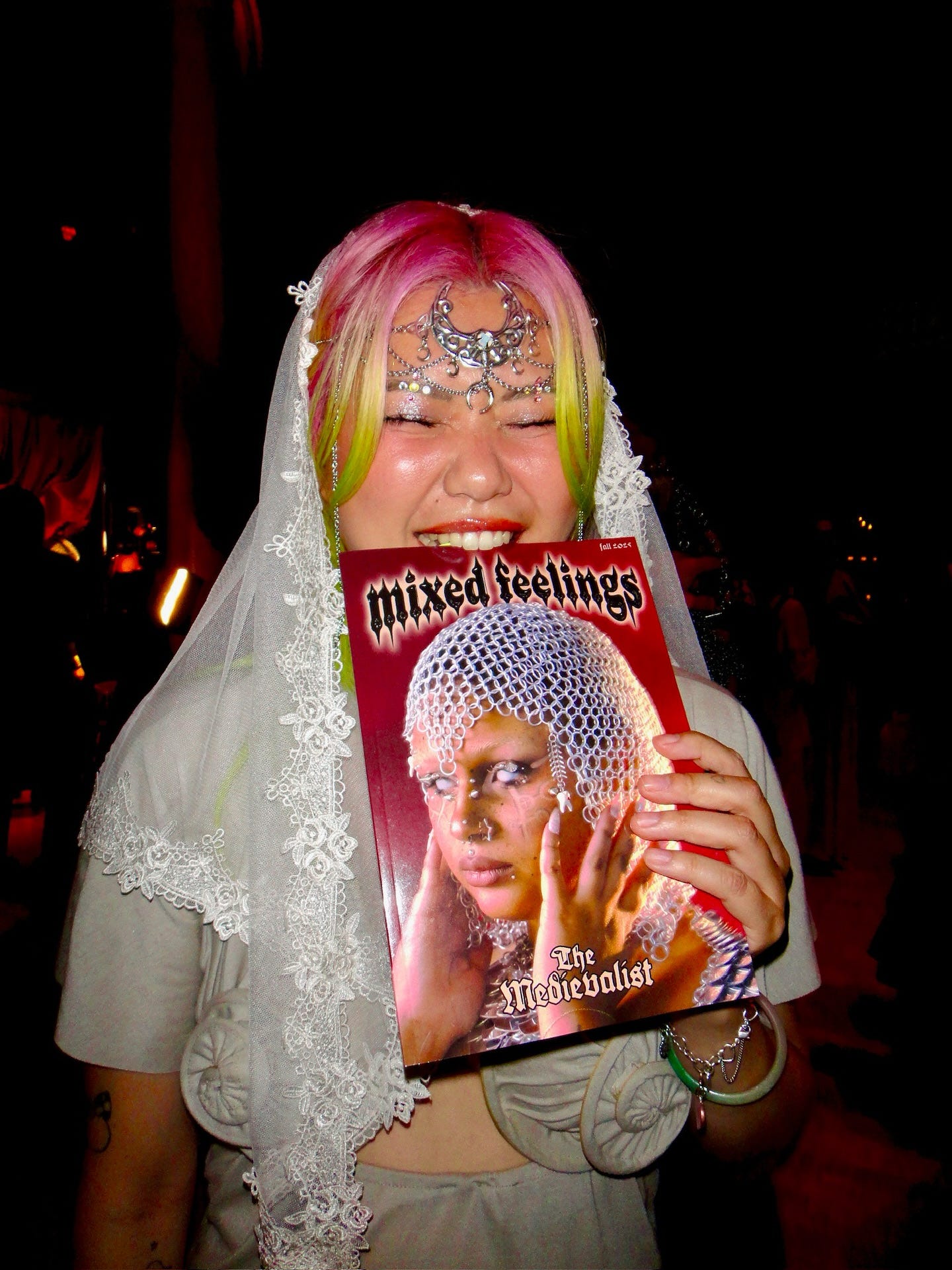
I started mixed feelings because I felt like there needed to be a space for youth culture coverage that is a little unhinged and very specific. That’s something that the core mixed feelings team—myself, Logan Tsugita our art director, and Amalie MacGowan our editorial director—have always considered our “core values” as a brand. Fan culture is delightful, and in my opinion, intrinsically linked to mental health because of the power of fan community. It’s been astounding to see the mixed feelings universe come to life through our live events. Last year, we launched our first print issue—a 48-page magazine dedicated to medievalcore and its interwoven threads throughout fashion, film, pop culture, and more. We hosted our issue launch party at Judson Memorial Church in Washington Square Park and asked our audience to come in their best medievalcore-inspired looks. We had folks show up in chainmail with swords and shields, as fae witches with elf ears and magic wands, and even one reader who came dressed as Fiona from Shrek! I always hear from our audience that it’s so hard to meet new people today, but the power of the mixed feelings universe is knowing that if you’re at a mixed feelings event, you’re in the company of dozens of soon-to-be friends.
You are the new Creative Editorial Director of Teen Vogue! How are you and the organization intentionally thinking about elevating Asian Pacific identities, both visually and editorially?
At Teen Vogue we are dedicated to reflecting the multifaceted interests of young people and spotlighting the experiences of young people today. And while I wouldn’t say I’m making conscious decisions to bring Asian Pacific identities into all our work, there is no denying the power and influence of the Asian Pacific diaspora and how it inspires and moves culture globally today. Because of this, it’s frankly very natural for our coverage to include all the ways Asian Pacific culture impacts youth culture and we do this in a myriad of ways from our extensive coverage of K-pop to spotlighting Asian Pacific artists like Fujii Kaze and BINI, to emerging Asian designers like Diya Joukani.
Teen Vogue has always punched above its weight. What’s the version of this publication that you’re building toward, and what would have to be true two or three years from now for you to feel like you got it right?
That is so kind of you to say. Thank you! I think a lot of Teen Vogue’s success has been because it’s never underestimated young people. Teen Vogue in this new era is going to build upon that and inject a lot more fantasy, whimsy, and specificity into everything we do. I want Teen Vogue to feel more participatory, more immersive, and deeply embedded in youth culture, genuinely reflecting the dichotomy of what it’s like to grow up as a young person today: politics coverage can live alongside deep dives into niche fandoms, and conversations about mental health can have interwoven threads through fashion, beauty, or gaming because that reflects the actual interiority of young people today.
All of our visuals from photo features to social graphics are getting a major upgrade, which we’re rolling out fully in June. We’ve already launched a slew of new series, such as The Collectors, which is a photo and video series that spotlights collecting culture [and] a new hosted video series Make Me A Fan, which asks guests to convince a host to become an acolyte of their favorite fandom in 2 minutes or less. We’re also expanding into verticals we haven’t quite explored in full before, like gaming.
I think in a couple of years I’ll feel like we got it “right” if we’ve continued to build out a true ecosystem for the magazine. We talk about world building a lot at Teen Vogue, and for us, that means video, events, social, live experiences, and franchises our audience can build rituals around. We’re building our universe, and the goal is to give young people the tools and the inspiration to build their own universes, too.
What patterns have you noticed that set younger generations apart from previous generations?
They are SO entrepreneurial and innovative! There is such a brilliant DIY culture with young people today that I find so inspiring. They’re building their own cyberdecks, making their own video games, advocating for the issues they care about… the stereotype that young people are “lazy” can’t be further from the truth.
The entry points into media have completely changed. What do you think still matters that people underestimate, and what advice would you give to an aspiring journalist?
One of my friends, Delia Cai, who writes the newsletter Deez Links, recently taught me the term “horizontal networking”, and it is such a perfect way to describe the importance of meeting peers in your industry. People put a lot of emphasis on “networking up,” but getting to know other young journalists, producers, editors, creators, and assistants coming up alongside you is crucial, too. Those are the people who will eventually move on to new companies and greenlight exciting new projects, as will you. As you grow in your careers you’ll open doors for each other, and that is so special. Beyond that, they’ll also teach you things and inspire your work in ways that are just as valuable as giving you a referral for a job. I am so thankful for those relationships in my life. When you get your first nasty comment or you royally f**k up at work and think the damage is “irreparable,” those people are the ones who will talk you through it and give you the advice that helps you move onward and upward.
Lightning Round
Morning Routine: Nonexistent. I wake up 20 minutes before I have to run to the Subway platform. My morning routines are not peaceful or meditative; they’re efficient at best, chaotic at worst. I’ve always been this way.
Favorite Book: I love books with hard magic systems. A recent favorite was the Mistborn trilogy by Brandon Sanderson!
Last Movie You Watched: The Secret World of Arrietty
Dream Collaborator: I don’t know what we’d collaborate on but Jane Remover
Comfort Food: Several slices of American cheese